
The Price of Pet Care – How Private Equity is Reshaping Veterinary Medicine
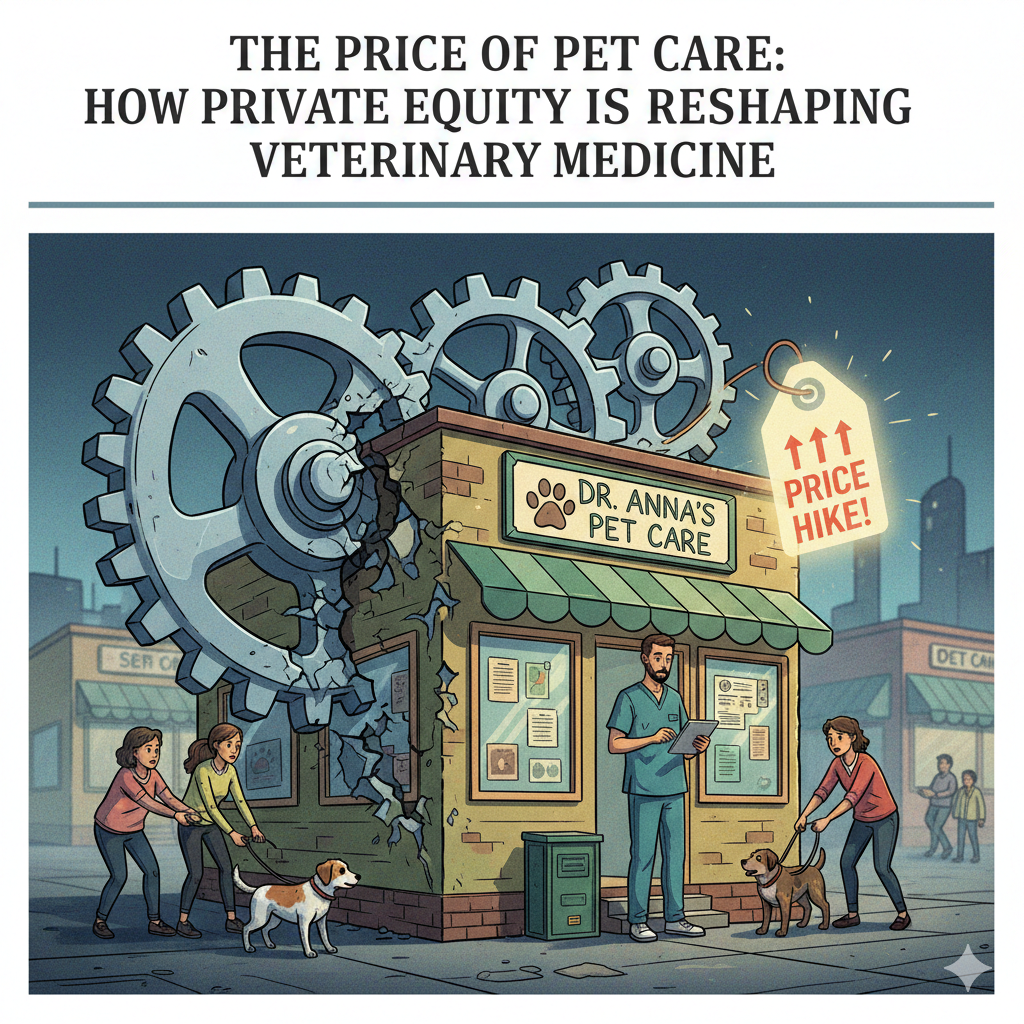
For many of us, our pets are cherished family members. We want to provide them with the best possible care, and historically, our local veterinarian has been a trusted and accessible partner in that journey. However, a significant shift has been occurring in the veterinary landscape over the past decade: the increasing acquisition of independent veterinary practices by private equity firms. This trend is raising questions among pet owners about rising costs and the future of pet care.
The Price of Pet Care

The Rise of Corporate Ownership
Private equity firms are investment companies that pool capital to acquire businesses, aiming to improve their profitability and eventually sell them for a higher price. In the veterinary sector, they’ve identified a robust and growing market. Pet ownership is on the rise, and spending on pets continues to climb, making veterinary clinics an attractive investment.
These firms often acquire multiple practices, consolidating them under a larger corporate umbrella. This can lead to increased efficiencies through centralized management, bulk purchasing, and shared administrative services. For selling veterinarians, often nearing retirement or facing the complexities of running a small business, a private equity buyout can offer a lucrative exit strategy and a simplified transition.
The Impact on Pet Owners and Prices
While corporate consolidation can bring certain benefits, many pet owners are experiencing a tangible downside: higher prices. Anecdotal evidence, and increasingly, industry analysis, suggests that veterinary costs have been climbing at a rate that outpaces general inflation. Several factors linked to private equity ownership may contribute to this:
Profit Motive: Private equity firms are driven by maximizing shareholder returns. This can translate into pressure on practices to increase revenue and profitability, potentially through higher service fees, increased recommendations for certain procedures, or upselling.
Standardization of Services: While efficiency can be a goal, corporate structures might also lead to a standardization of services and pricing across their network. This could mean less flexibility for individual veterinarians to adjust pricing based on local market conditions or a pet owner’s specific financial situation.
Reduced Competition (Potentially): As more independent practices are absorbed, the market can become less competitive in certain areas. With fewer choices, pet owners may have less leverage when it comes to pricing.
The Veterinarian’s Perspective
The impact isn’t just felt by pet owners. Veterinarians themselves are experiencing changes. While some appreciate the business support and potential for career advancement within a larger organization, others express concerns about:
Loss of Autonomy: Veterinarians might find their clinical autonomy reduced, with corporate protocols influencing treatment decisions or practice management.
Pressure to Meet Financial Targets: The emphasis on profitability can create pressure to meet financial targets, potentially leading to burnout or moral distress for veterinarians who entered the profession to care for animals, not just to generate revenue.
Impact on Practice Culture: The close-knit, community-focused culture often found in independent practices can sometimes shift in a corporate environment.
What Does This Mean for the Future?
The trend of private equity investment in veterinary medicine shows no signs of slowing down. As pet owners, it’s becoming increasingly important to be informed and proactive:
Ask Questions: Don’t hesitate to ask your veterinarian about pricing, treatment options, and if their practice is independently owned or part of a larger group.
Seek Multiple Opinions: For major procedures or diagnoses, getting a second opinion can be valuable.
Consider Pet Insurance: As costs rise, pet insurance is becoming a more attractive option for managing unexpected veterinary expenses.
The evolving landscape of veterinary care presents both challenges and opportunities. Understanding the forces at play, particularly the role of private equity, is crucial for advocating for our pets and ensuring that quality, affordable veterinary care remains accessible for all.
What are your thoughts on this trend? Have you noticed changes in your vet bills or your veterinary practice? Share your experiences in the comments below!
The Price of Pet Care
Click here to view the Best Airedale Dog Toy

The Airedale Terrier – – – He is swift, formidable, graceful, big of brain, an ideal chum and guard. ….To his master he is an adoring pal. To marauders he is a destructive lightning bolt.”
+++++++++++++++++++++++
Our Airedale Terrier Youtube channel.
****
Disclaimer for all related content: *Please note, this channel is not intended for children under the age of 18. I am not a professional dog trainer or veterinarian. Any tips, product ideas, food, treats, suggestions or advice are simply my opinion only and what works for me. My content is not intended to replace your vet/trainer recommendations. Please always seek professional guidance before taking any action. Please foster, feed and train dogs at your own risk. FTC: My content may include affiliate and/or sponsored links which means your support helps move our mission forward.
